Best office chairs for back pain
Updated June 2026Independently researchedNo paid placement.
The Steelcase Leap V2 is the best office chair for back pain thanks to its live-back technology and adjustable lumbar support that responds to your movements.
The Herman Miller Aeron is the best overall pick for anyone who wants a breathable, durable chair with strong lower-back support, while the Steelcase Gesture is the best premium choice for those who need extreme adjustability in the armrests and seat depth.
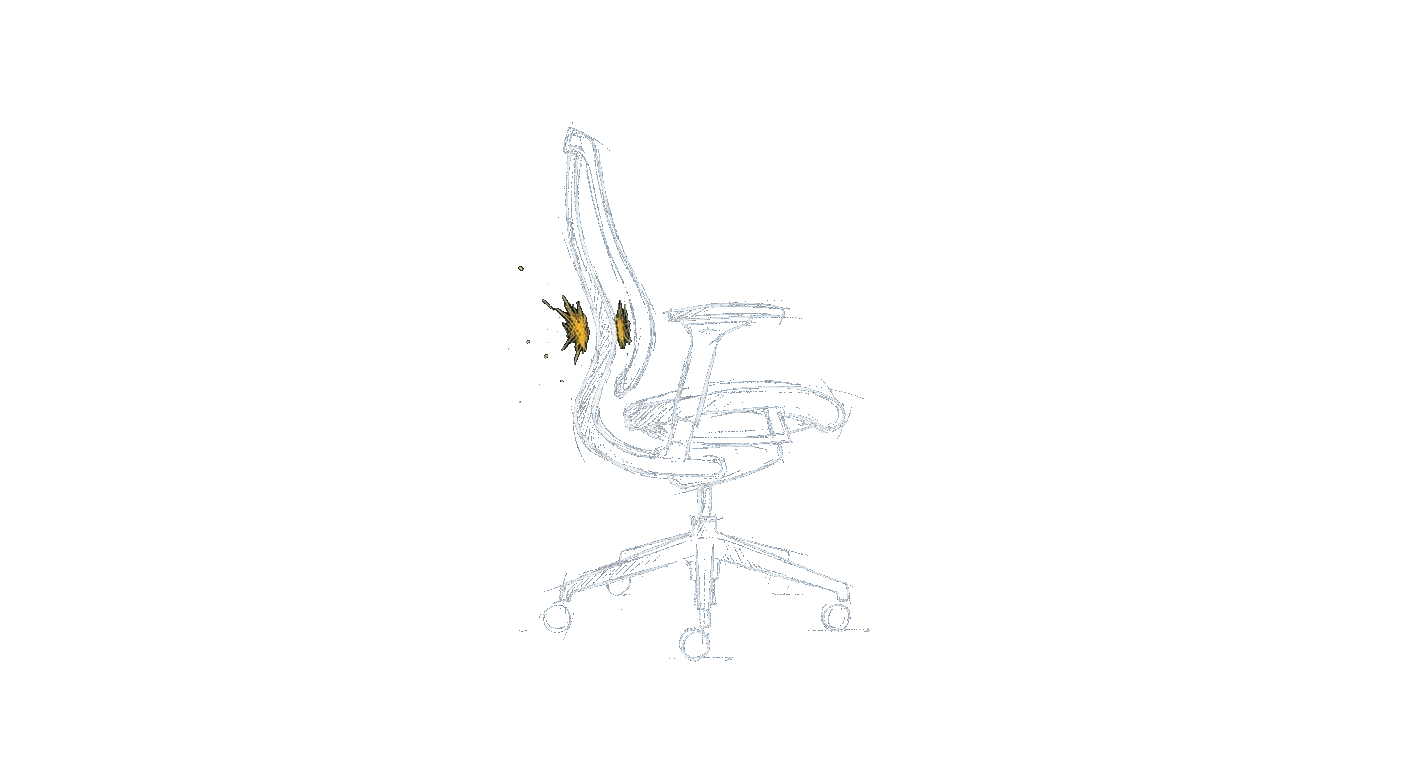
If you spend eight or more hours a day in an office chair, back pain isn’t just an annoyance, it can derail your productivity and your health. The right chair doesn’t fix bad posture by itself, but it can make good posture effortless by giving your spine the active support it needs where it needs it most. The key features to look for are adjustable lumbar support that actually moves with you, a seat depth that fits your thigh length, and armrests that don’t force your shoulders into a shrug. Not every well-known ergonomic chair is a winner for back pain. Some are built for breathability or style and skimp on lower-back adjustability. The three chairs here are proven performers, each with a different emphasis: one prioritises dynamic lumbar support, another balances comfort with airy mesh, and a third offers the most customisable frame money can buy. The choice comes down to your body type, your pain pattern, and how much you’re willing to spend on a chair that will last a decade.
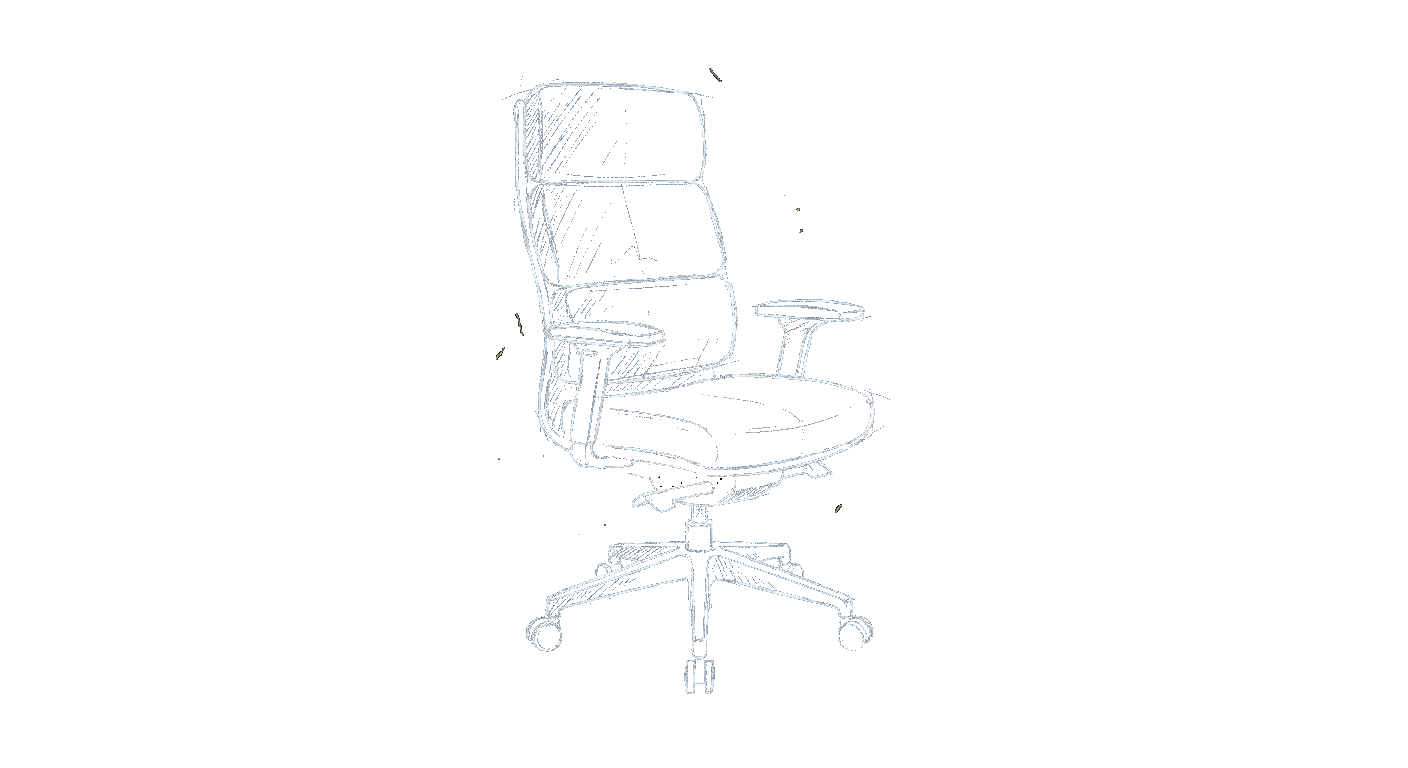
Steelcase Leap V2
the back-pain specialist
4.5out of 5The Steelcase Leap V2 is the gold standard for people who suffer from chronic lower-back discomfort. Its patented LiveBack mechanism flexes as you lean forward or recline, keeping the lumbar curve in constant contact with your spine. The lumbar support is height- and depth-adjustable, and the seat cushion offers enough firmness to avoid sinking without feeling like a board. It’s not the flashiest chair, but it’s the one that relieves pain most reliably.
Price range: $$$
Check price on Amazon →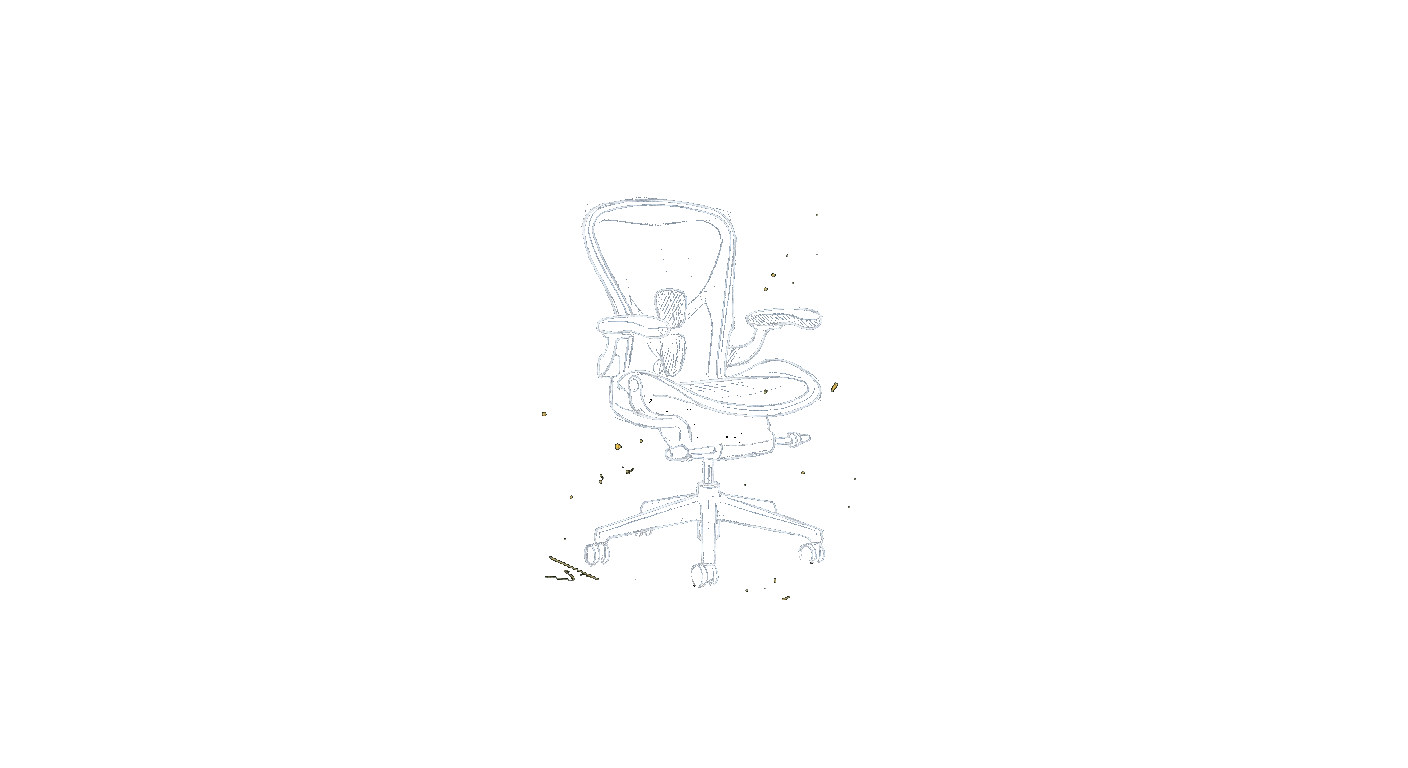
Herman Miller Aeron
the do-it-all default
4.6out of 5The Herman Miller Aeron remains the most famous ergonomic chair because it gets the fundamentals right for a huge range of body types. The three sizes (A, B, C) mean you can find a near-custom fit, and the Pellicle mesh eliminates heat buildup while still providing a firm, supportive seat. Its PostureFit SL lumbar support is good, but not as dynamic as the Leap’s, it’s a static curve that you adjust once. If you don’t need the flex of the Leap, the Aeron is a brilliant all-rounder.
Price range: $$$
Check price on Amazon →Steelcase Gesture
the ergonomic chameleon
4.4out of 5The Steelcase Gesture is built for people who never sit the same way twice. Its four-dimensional armrests can be moved in every direction, and the seat slide adjustment is generous. The Core EqualBack mechanism bends like a spine, providing continuous back support even when you’re perched on the edge of the seat. However, the lumbar prominence is less pronounced than on the Leap, and the premium price tag puts it out of reach for many budgets.
Price range: $$$$
Check price on Amazon →| Award | Model | Our score | Price | Best for | |
|---|---|---|---|---|---|
| Best overall | Steelcase Leap V2 | 4.5 / 5 | $$$ | Anyone with chronic lower back pain, sciatica, or a history of disc issues who needs a cha | Check price → |
| Runner-up | Herman Miller Aeron | 4.6 / 5 | $$$ | People who run warm, sit for long stretches, and want a chair that disappears under them, | Check price → |
| Best value | Steelcase Gesture | 4.4 / 5 | $$$$ | Professionals who vary their sitting positions constantly, cross-legged, leaning forward, | Check price → |
The picks in detail
1. Steelcase Leap V2: the back-pain specialist
Best overallThe Steelcase Leap V2 is the gold standard for people who suffer from chronic lower-back discomfort. Its patented LiveBack mechanism flexes as you lean forward or recline, keeping the lumbar curve in constant contact with your spine. The lumbar support is height- and depth-adjustable, and the seat cushion offers enough firmness to avoid sinking without feeling like a board. It’s not the flashiest chair, but it’s the one that relieves pain most reliably.
Pros
- Dynamic lumbar support that moves with you throughout the day
- Separate height and depth adjustments for the backrest
- Excellent build quality that easily lasts 10–15 years
- Quiet mechanism with smooth recline tension adjustment
Cons
- Armrests feel a bit wobbly at full extension
- Seat cushion can be too firm for very lightweight users
- No mesh option, upholstery can get warm in hot climates
Who it’s for
Anyone with chronic lower back pain, sciatica, or a history of disc issues who needs a chair that actively supports their spine through every movement.Who should skip it
You prefer a breathable mesh seat that stays cool all day, or you need extra-cushy padding for a pre-existing tailbone condition.2. Herman Miller Aeron: the do-it-all default
Runner-upThe Herman Miller Aeron remains the most famous ergonomic chair because it gets the fundamentals right for a huge range of body types. The three sizes (A, B, C) mean you can find a near-custom fit, and the Pellicle mesh eliminates heat buildup while still providing a firm, supportive seat. Its PostureFit SL lumbar support is good, but not as dynamic as the Leap’s, it’s a static curve that you adjust once. If you don’t need the flex of the Leap, the Aeron is a brilliant all-rounder.
Pros
- Exceptionally breathable mesh seat and back that never trap heat
- Three distinct sizes for a precise fit from petite to tall
- Fully recyclable construction and legendary durability
- Smooth tilt mechanism with forward-tilt option for desk work
Cons
- Fixed lumbar support can’t move with you as you shift positions
- Hard plastic frame edges can be uncomfortable for larger thighs
- Very expensive once you add the upgraded PostureFit SL option
Who it’s for
People who run warm, sit for long stretches, and want a chair that disappears under them, outstanding support without feeling any foam or leather.Who should skip it
Your primary concern is active lower-back support that tracks every lean, or you need a soft cushion because you have tailbone pain.3. Steelcase Gesture: the ergonomic chameleon
Best valueThe Steelcase Gesture is built for people who never sit the same way twice. Its four-dimensional armrests can be moved in every direction, and the seat slide adjustment is generous. The Core EqualBack mechanism bends like a spine, providing continuous back support even when you’re perched on the edge of the seat. However, the lumbar prominence is less pronounced than on the Leap, and the premium price tag puts it out of reach for many budgets.
Pros
- Unmatched armrest adjustability, move them in, out, up, down, and pivot
- Seat depth slides smoothly to accommodate long or short thighs
- LiveBack polypropylene spine mimics natural spinal curvature
- Contoured foam seat offers plush comfort for all-day sitting
Cons
- Lumbar support is less aggressive than the Leap’s, so not ideal for severe back pain
- Very high cost that’s hard to justify if you don’t need the armrest range
- Some users report the seat cushion firms up after a year of use
Who it’s for
Professionals who vary their sitting positions constantly, cross-legged, leaning forward, reclining, and want a chair that adapts without force.Who should skip it
Your main goal is aggressive, targeted lumbar pressure for chronic pain, or you don’t need extreme armrest freedom and want to spend less.Best for specific needs
Best for chronic lower back pain
If you deal with constant ache or stiffness in your lumbar region, the Steelcase Leap V2 is the clear choice. Its dynamic LiveBack doesn’t just hold your spine in one rigid curve, it flexes and follows you as you move, so the support never leaves your back. Combined with height- and depth-adjustable lumbar pads, it gives you the most precise pain relief you’ll find in an office chair without a prescription. Our pick: Steelcase Leap V2.
Best for staying cool during long work hours
Hot offices and long calls can make any chair feel like a sweat lodge. The Herman Miller Aeron’s full Pellicle mesh eliminates the problem entirely: the seat and back are completely open to airflow. Despite the lack of foam, the mesh provides firm support that doesn’t sag, and the three size options ensure the frame isn’t digging into your legs. It’s the best choice for warm climates or people who naturally run hot. Our pick: Herman Miller Aeron.
Best for extreme adjustability and varied sitting positions
Not everyone sits with both feet flat on the floor. If you tuck one leg under you, lean far back with a keyboard tray, or often switch between upright and reclined, the Steelcase Gesture gives you the most freedom to find a comfortable angle. The armrests move in more directions than any competitor, and the seat slide is generous enough for very tall users. It’s a premium tool for people who refuse to be locked into a single sitting posture. Our pick: Steelcase Gesture.
Our verdict
The best office chair for your back pain depends on how your pain behaves and how you sit. For most people with chronic lower-back issues, the Steelcase Leap V2 is the one to buy, it addresses the root problem of support that stays put regardless of your movement. If you run warm or want a classic that works for nearly everyone, the Herman Miller Aeron is a close second that sacrifices dynamic lumbar for breathability. And if you have the budget and need a chair that adapts to every weird sitting habit you have, the Steelcase Gesture is worth the stretch. But start with the Leap: it’s the chair that got the most praise from owners who actually live with back pain every day.
Frequently asked questions
What kind of office chair is best for lower back pain?
One with adjustable lumbar support you can position to fill the curve of your lower back, plus seat-depth and recline adjustment so your spine stays supported as you move. A chair that encourages slight, frequent movement (good tilt) tends to ease back pain more than a rigid one that locks you in one position.
Does lumbar support actually help back pain?
For many people, yes, proper lumbar support maintains the natural inward curve of the lower spine and reduces the slouch that strains discs and muscles. It works best when it’s adjustable, so you can match it to your height and the depth of your own lower-back curve rather than a fixed bump.
Should I recline or sit upright to protect my back?
A slight recline, around 100 to 110 degrees, often loads the spine less than bolt-upright sitting because the backrest shares some of your weight. The bigger win is movement: shifting position and reclining periodically beats holding any single posture for hours, even a textbook-perfect one.
Can the right chair fix my back pain on its own?
It helps a lot but isn’t a cure by itself. A supportive, well-adjusted chair removes a major daily aggravator, but movement breaks, correct desk and monitor height, and overall activity matter too. If pain is persistent or severe, treat the chair as one part of a plan and see a professional.
Is a kneeling or saddle chair better for back pain?
They suit some people by opening the hip angle and encouraging an upright pelvis, but they lack back support and aren’t comfortable for everyone all day. Most people do best with a fully adjustable ergonomic chair; alternative seating is worth trying as a part-time change, not a guaranteed fix.