Aeron vs Leap
Updated June 2026Independently researchedNo paid placement.
For most people, the Steelcase Leap is the better buy thanks to its unparalleled adjustability and cushioned seat that suits a wider range of body types and work styles. Choose the Herman Miller Aeron only if you prioritise a breathable mesh back, a sculpted seat, and a design that stays cool during long shifts, and you happen to fit one of its three fixed sizes perfectly.
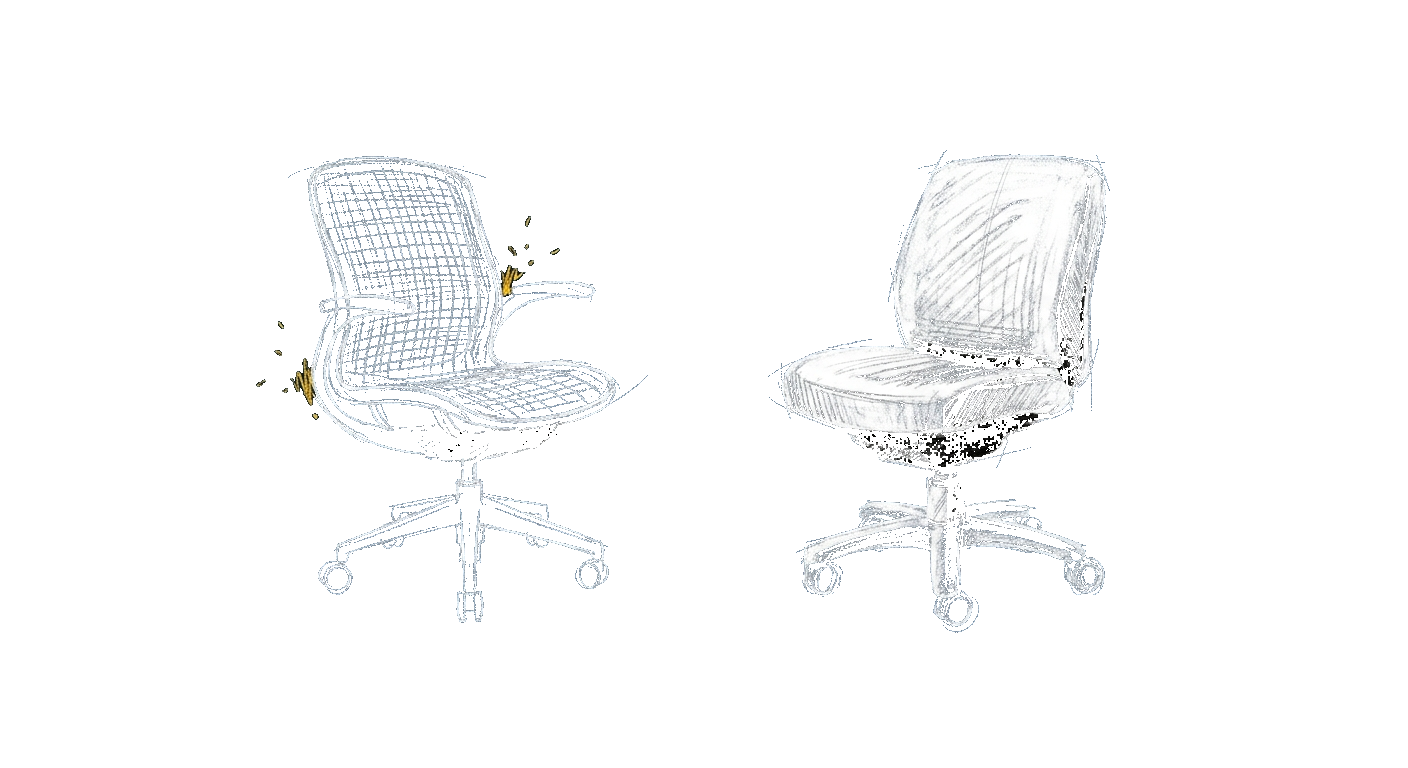
Mesh vs upholstered: which feels better for all-day use?
The Aeron’s fully mesh construction is a blessing in warm offices or if you run hot. The Pellicle mesh stretches differently in the seat and back, creating zones of firmer and softer support. That said, you can’t add a cushion without changing the ergonomics, and the mesh edges can dig into the backs of thighs if you’re on the taller side. The Leap uses a thick, multi-layer foam seat and a fabric or leather back. The foam is dense enough not to bottom out, but it does trap more heat. Many owners find the Leap’s seat more forgiving for long static sitting, while the Aeron keeps you cooler when you’re actively leaning or fidgeting. Neither is universally better, it comes down to your body temperature and whether you prefer a firm, suspended feel or a plush yet supportive landing.
Which chair offers better adjustability and ergonomic fine-tuning?
The Leap is the undisputed champion of adjustability. It has independent lumbar height and depth adjustments, a seat depth slider, adjustable armrests that move in four dimensions, and a back that flexes with you while still giving firm support. You can lock the recline in multiple positions or let it float freely. The Aeron is simpler: you get adjustable arms (height and pivot on some versions), a forward seat tilt option, and a tension knob. Lumbar support is a snap-in pad that moves up and down, but there’s no depth control. The tilt mechanism is either locked or unlocked; you don’t get the same fine-grained recline stops. If you share a chair or like to tweak settings throughout the day, the Leap wins hands down. If you prefer set-it-and-forget-it simplicity, the Aeron’s fewer adjustments can actually be a pro.
How do sizing and fit compare between the Aeron and Leap?
The Aeron comes in three distinct sizes (A, B, and C), each with a fixed seat width, seat depth, and back height. Sizing is critical, buying the wrong size can lead to pressure points on your thighs or a back that’s too short. The brand provides a size chart based on weight and height, but it’s not a perfect match for everyone. The Leap, by contrast, is a single frame that accommodates most body shapes via its adjustable seat depth and lumbar range. It doesn’t have the same tailored, wrap-around feel of a correctly sized Aeron, but it’s far more forgiving if multiple people will use the chair or if your proportions fall outside the Aeron’s size envelopes. For small or very tall users, the Aeron’s size C or A can be a lifesaver. For everyone else, the Leap’s adjustability makes it easier to dial in a good fit without gambling on the right size.
Warranty and long-term durability: which holds up better?
Both chairs come with a very generous warranty, typically 12 years for the Aeron and a similar period for the Leap, covering parts and labour. In practice, both are built to last a decade or more in an office environment. The Aeron’s mesh can sag or tear if abused, but replacement mesh is available and relatively easy to install. The plastic frame parts are robust. The Leap’s foam seat can compress faster if you’re heavier, and the multitude of moving parts (arm adjustments, seat slider, lumbar mechanism) can develop squeaks over time. However, Steelcase has a strong reputation for serviceability and sending replacement parts. All things equal, the Aeron is slightly simpler mechanically and may be easier to keep running. The Leap offers more features that could eventually need adjustment, but both chairs are expected to outlast many cheaper alternatives by a wide margin.
Who should buy the Aeron, and who should buy the Leap?
The Aeron is ideal if you work in a warm environment, want a chair that looks iconic, and are confident you fit one of its three sizes. It also suits people who prefer a firm, suspended seat and don’t need to constantly adjust settings. It’s a fantastic choice for those who tend to shift positions frequently. The Leap is better for anyone who values customisation, shares their chair with others, or wants a cushioned seat that still offers excellent lower-back support. It’s the safer all-rounder for a home office where comfort preferences change throughout the day. If you’ve ever felt that a chair’s lumbar support was in the wrong spot, the Leap’s adjustable lumbar depth is a game-changer. Both are premium ergonomic chairs that cost a few hundred dollars even on the used market. If you can, try sitting in each for 20 minutes, your back will tell you which one fits.
Frequently asked questions
Which chair is better for long hours of sitting?
Both are excellent, but the Leap generally wins for static sitting because its cushioned seat reduces pressure points over time. The Aeron is better if you tend to move around a lot, since the mesh encourages micro-adjustments and stays cooler.
Can you sit cross-legged in the Aeron or Leap?
The Aeron’s fixed, sculpted rim makes it difficult to tuck one leg under you. The Leap’s flatter, padded seat is more accommodating for casual postures like cross-legged sitting, though neither chair was designed primarily for that.
Which chair has better lumbar support?
The Leap offers more precise lumbar support with independent height and depth adjustment. The Aeron’s lumbar support is a simple snap-in pad that moves up and down but has no depth control, some find it too aggressive, others barely notice it.
Is the Aeron quieter than the Leap?
Generally yes. The Aeron’s simpler mechanism has fewer moving parts, so it tends to be silent. The Leap’s many adjustments can develop small squeaks or clicks over time, especially the seat slider and arm pads, though regular maintenance keeps them quiet.
Which chair is easier to adjust while seated?
The Leap is designed for in-chair adjustments: all controls (seat depth, lumbar, recline tension, armrests) are reachable while sitting. The Aeron’s tension knob is under the seat and can be fiddly to reach, and its arm height adjustment is less convenient mid-session.
Do these chairs hold their resale value?
Yes, both the Aeron and Leap retain value remarkably well on the used market, typically 40-60% of their original retail price after several years. The Aeron’s name recognition often gives it a slight edge in resale ease, but both are considered long-term investments.