Semi-automatic vs super-automatic espresso
Updated June 2026Independently researchedNo paid placement.
Choose a semi-automatic machine if you enjoy hands-on control and want room to improve your shots; choose a super-automatic if you want fresh espresso at the push of a button. Semi-automatics offer a higher shot ceiling and simpler maintenance, while super-automatics trade some control and repairability for daily convenience.
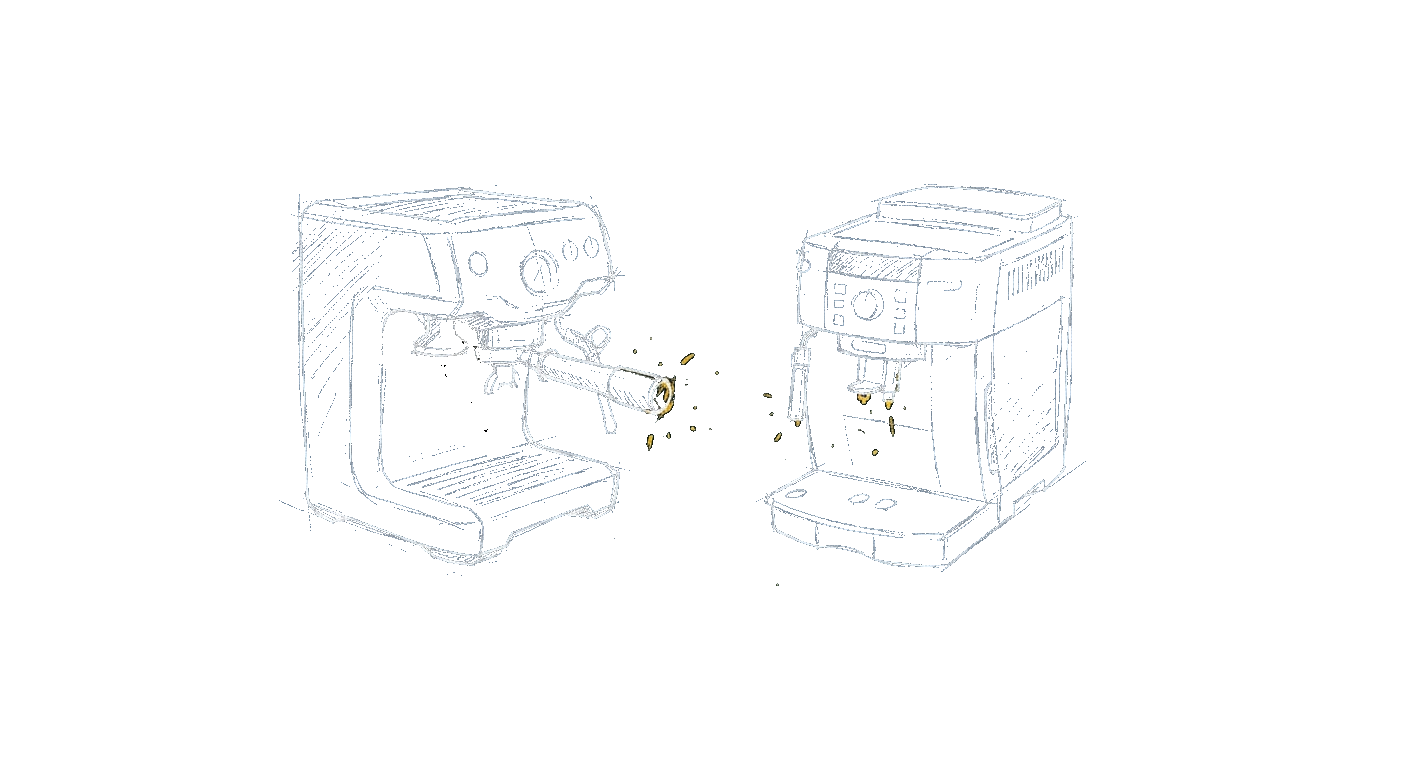
What’s the difference between semi-automatic and super-automatic espresso machines?
A semi-automatic espresso machine handles water temperature and pump pressure, but you start and stop the shot. You take charge of the beans, grinder, dose, and tamp. That means every shot is a small craft project, and you have the freedom to change nearly anything to taste. A super-automatic espresso machine grinds, doses, tamps, brews, and often steams milk with one button press. Many models let you program drink size and milk texture. You’re choosing consistency and speed over direct control.
Which type makes better espresso?
Semi-automatic machines have a higher shot ceiling. Because you control grind size, dose, and extraction time, you can dial in different beans and pull genuinely excellent shots once you learn the machine. A skilled home barista can often out-produce even the fanciest super-automatic when it comes to flavor clarity and complexity. Super-automatics are designed for repeatable results, not peak performance. They can make a reliably good cup, especially with fresh beans and proper maintenance, but their internal grinders and automation limit how much you can fine-tune. If you’re chasing café-quality espresso and love tweaking variables, the semi-automatic is the better path.
How much cleaning and maintenance does each type need?
Semi-automatics pile a lot of the work on you. Every session usually means knocking out the puck, rinsing the portafilter, wiping the steam wand, and wiping the group head. You’ll also need to backflush regularly, and you’ll likely own a separate grinder that requires its own cleaning and occasional burr upkeep. Super-automatics have more automatic maintenance built in, but that doesn’t make them less work. You need to empty the brew unit, rinse or wash internal parts, clean the milk system after every use, and descale more often because of all the internal plumbing. Repairs also tend to be more involved and expensive, so a super-automatic can be a bigger long-term commitment than it initially seems.
Are super-automatic machines worth the convenience?
If you drink mostly cappuccinos and lattes during busy weekday mornings, a super-automatic can be genuinely transformative. You press a button, walk away, and come back to a finished drink. That convenience is real, and for many households it means the difference between using the machine and letting it collect dust. The trade-off is complexity. More automated parts mean more that can go wrong, and you’ll often pay a big premium for that convenience. Semi-automatics take more effort per shot, but they’re typically easier to repair, more affordable to fix, and less likely to leave you stranded by a finicky internal mechanism.
Who should buy a semi-automatic, and who should buy a super-automatic?
Buy a semi-automatic if you’re willing to learn and practice. You’ll enjoy weighing beans, adjusting grind, tasting the difference, and slowly improving your technique. It’s the right choice if espresso itself is the hobby, not just the drink. Buy a super-automatic if you value a fast, low-friction morning ritual. You probably don’t want to watch a timer or read about extraction ratios. You just want a great latte with zero fuss. If you rarely change beans and haven’t owned a grinder before, a super-automatic removes the hardest part of home espresso.
Frequently asked questions
Can a semi-automatic espresso machine make frothed milk for lattes?
Yes. Most semi-automatics include a steam wand, and you can froth milk manually for lattes and cappuccinos. It takes some practice to get silky microfoam, but that manual control is exactly what many home baristas enjoy.
Do super-automatic machines use whole coffee beans or pods?
Most super-automatics use whole beans and grind them fresh for each drink. Many also include a bypass doser, which lets you use ground coffee or a single-serve pod when you want a different flavor or decaf.
Do I need a separate grinder for a semi-automatic espresso machine?
Yes, unless you buy a semi-automatic with a built-in grinder. A proper espresso grinder is essential, since pre-ground coffee goes stale quickly and can never deliver the freshness you need for a good shot.
Are super-automatic machines more expensive than semi-automatic machines?
At comparable build quality, super-automatics tend to cost significantly more because of the grinding, brewing, and milk-frothing automation. There are budget-friendly options in both categories, but you’ll almost always pay a convenience premium for a super-automatic.
How long does it take to learn a semi-automatic espresso machine?
You can pull a drinkable shot on day one, but dialing in beans and learning to steam milk well usually takes a few weeks of regular practice. That learning curve is part of the appeal for many owners.
Which kind of espresso machine is easier to repair?
Semi-automatic machines are generally simpler inside, with familiar pumps, valves, and heating elements. Super-automatics pack many moving parts into a small space, so repairs are trickier and often more costly. For long-term repairability, a semi-automatic is the safer bet.