Espresso machine buying guide
Updated June 2026Independently researchedNo paid placement.
The single most important upgrade you can make for better espresso is your grinder, not your machine. A consistent, stepless grinder with sharp burrs lets you dial in extraction properly, while even an expensive machine will struggle with uneven or stale grounds.
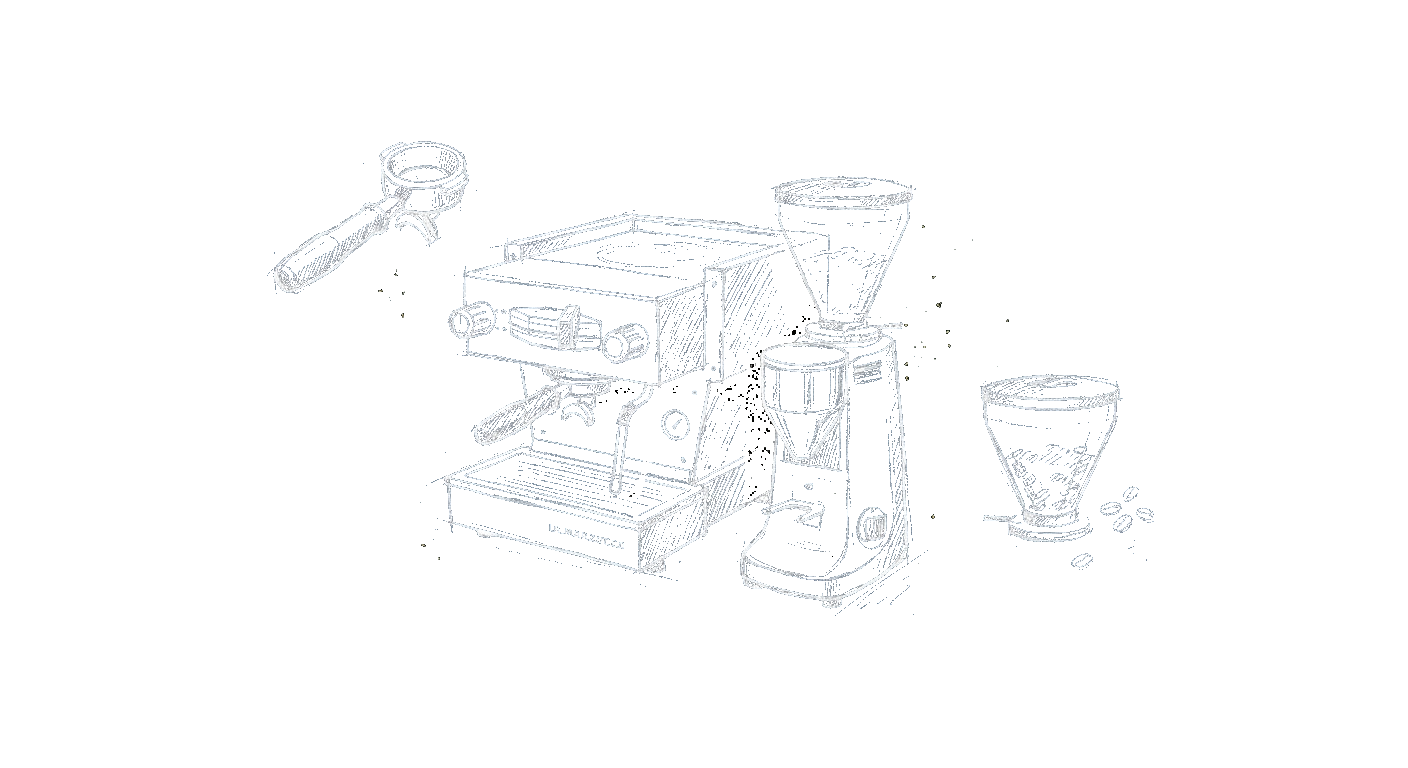
Why the grinder matters more than the machine
It’s tempting to fixate on shiny boilers and E61 groups, but the grinder is the real bottleneck. Espresso extraction happens in seconds, and any inconsistency in particle size, fines mixed with boulders, will channel water through the path of least resistance, leaving you with sour or bitter shots no matter how fancy the machine. A capable espresso grinder should offer stepless or very fine micro-adjustment so you can dial in by tiny increments. Flat burrs tend to produce more uniform particles than conical burrs at the same price, but geometry and build quality matter more than shape. Look for grind retention under a couple of grams and a design that makes cleaning easy, because stale coffee oils degrade flavor fast. Owner feedback across forums consistently shows that moving from a blade grinder to a proper burr grinder, even a hand-grinder at a budget-friendly price, improves shot quality more than doubling your machine budget. Spend at least as much on the grinder as on the machine if you can.
Single boiler, dual boiler, or heat exchanger: what changes your shot?
The boiler type directly affects temperature stability and workflow, which in turn affects shot quality. Single-boiler machines are affordable and compact, but you have to wait for steam after pulling a shot, and temperature management can be fussy. They work great for straight espresso, less so for back-to-back milk drinks. Heat exchanger (HX) machines use a single boiler that stays at steam temperature while a heat-exchange tube delivers brew-temperature water. They allow simultaneous brewing and steaming, but they typically need a cooling flush before pulling a shot to avoid overheating. The shot temperature can vary depending on how long the machine has been idle and your flush technique. Dual boilers give you independent temperature control for brew and steam. This means consistent brewing temperature from shot to shot without flushing, and steaming power on demand. For anyone who makes multiple milk drinks in a session or cares about precise temperature, a dual boiler is worth the higher cost. Published expert reviews show that temperature stability within one degree Fahrenheit is achievable with a well-designed dual boiler, while HX machines often swing two to four degrees.
Does PID temperature control actually matter?
Yes, a PID (proportional-integral-derivative) controller makes a real difference in consistency. Without a PID, many machines rely on a mechanical thermostat that allows the boiler temperature to drift a few degrees before kicking the heater back on. That swing can push your shot from perfect to sour or bitter partway through the extraction. A PID holds the boiler temperature within a very tight window, typically within one degree Fahrenheit. This means the water hitting your coffee puck is the same temperature at the start, middle, and end of the pull. You can also adjust the target temperature, which is useful because different coffees extract best at slightly different temperatures, light roasts often need a bit hotter water to extract fully, while dark roasts benefit from a cooler brew. Not every machine needs a PID. some high-end E61 machines use a large thermal mass and a well-designed group head to stabilize temperature passively. But for most home buyers, a PID is one of the most straightforward upgrades to shot consistency you can get.
Pressure profiling: should you pay for it?
Pressure profiling lets you change the water pressure throughout the shot, starting low to gently pre-infuse, then ramping up to full pressure, and tapering off at the end. This can help even out extractions with lighter roasts or finicky beans and can reduce channeling by allowing the puck to saturate gradually. Machines with built-in profiling, like those with a manual lever or a programmable pump, are significantly more expensive. A more accessible option is a machine with an adjustable over-pressure valve (OPV) so you can set the maximum brew pressure to around 9 bar instead of the higher pressures many pumps deliver out of the box. Simply lowering the pressure often improves extraction clarity and reduces bitter notes. For most home baristas, a steady 9 bar with good temperature control and a proper grind will produce excellent shots. Dedicated pressure profiling is a nice bonus for tinkerers, but it won’t fix a bad grinder or stale beans.
What about build quality and maintenance?
A machine built with brass or stainless steel boilers and commercial-style group heads will hold up for years and retain better heat stability. Cheaper machines often use aluminum boilers or plastic internal parts that wear out or leach tastes over time. Look for presence of a three-way solenoid valve, which releases pressure after the shot and keeps the puck dry, this makes cleanup easier and prevents over-extraction inside the portafilter. Maintenance matters equally. Every machine needs descaling if you have hard water, but many espresso machines warn you with lights or automatic cycles. Machines with a reservoir are simpler to refill but need counter space; plumbed models require a water line but offer constant supply and easier drainage. Buy a machine that you’re willing to clean regularly, backflushing with detergent, replacing group gaskets, and descaling every few months will keep your shots tasting fresh far longer than any upgrade.
Frequently asked questions
Should I buy a machine with a pressurized portafilter?
Pressurized portafilters use a small hole to create artificial crema, which lets you use pre-ground coffee or a less consistent grind. They’re fine for beginners with a blade grinder, but they limit quality, you get much better results with a non-pressurized basket and a real burr grinder.
How much should I spend on my first espresso setup?
A budget-friendly setup starts around a few hundred dollars for a capable burr grinder and a simple single-boiler machine. If you can stretch to the mid-range, a PID-equipped single boiler or a reliable heat exchanger will serve you for years. Avoid spending everything on the machine and leaving nothing for a decent grinder.
Is a manual lever machine better than an automatic?
Manual lever machines give you full control over pressure and pre-infusion, which can produce exceptionally sweet shots with light roasts. They require practice and are slower for milk drinks. Automatic machines are more consistent and easier for back-to-back shots. It’s a trade-off between control and convenience.
Do I need a separate grinder or can I use a built-in one?
Built-in grinders are convenient but rarely offer the adjustment range or particle consistency of a separate burr grinder. They also retain stale grounds and are harder to clean. A separate grinder will improve your shot quality and give you more flexibility to switch beans or dial in different roast levels.
How important is pre-infusion?
Pre-infusion wets the coffee puck at low pressure before full extraction, which helps reduce channeling and improves evenness. Many machines have a simple pre-infusion (a few seconds of low pressure from the pump or a line-pressure soak). It’s beneficial but not essential, a good grind and puck prep often compensate for a lack of pre-infusion.