Best espresso machines from $500 to $1,000
Updated June 2026Independently researchedNo paid placement.
The Breville Barista Pro is the best all-around espresso machine in the $500–$1,000 range thanks to its fast heat-up, built-in grinder, and forgiving steam wand.
The Rancilio Silvia is for purists who want a simple, mod-friendly machine with commercial-grade internals, while the Breville Barista Express suits beginners who prefer an all-in-one package with a slightly lower learning curve.
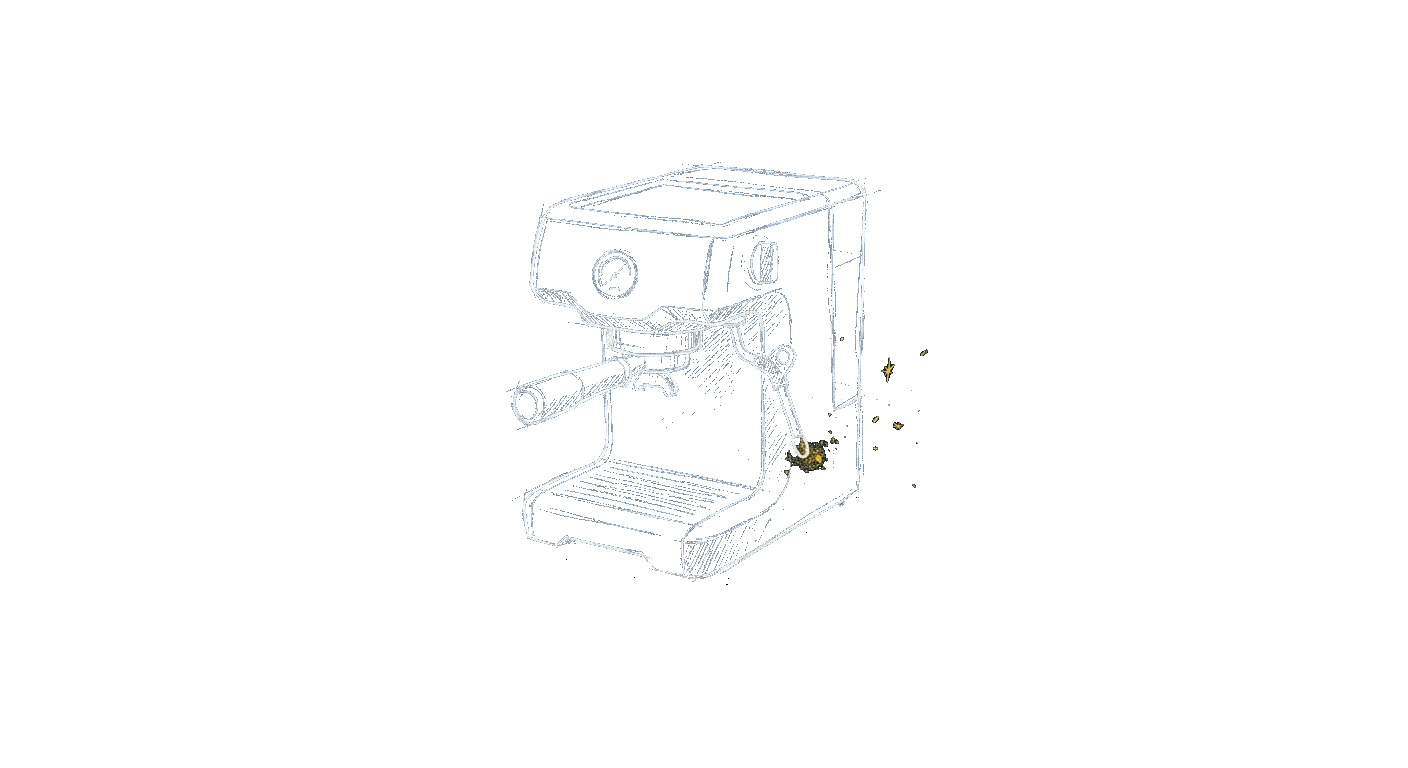
The price bracket is the sweet spot for home espresso. You get reliable temperature stability, a proper steam wand, and often a built-in grinder, without jumping to full prosumer prices. The key decisions come down to workflow: do you want a single appliance that grinds and brews, or do you prefer separate components for maximum flexibility? In this round-up we looked at three well-respected machines based on owner feedback, expert reviews, and long-term reputation. Our top pick balances speed, consistency, and ease of use for most home baristas. The other two serve specific priorities: pure espresso quality with room to upgrade, or a budget-friendly all-in-one that still delivers solid results.
Breville Barista Pro
the do-it-all default
4.6out of 5Fast heat-up time and a built-in conical burr grinder make this the most convenient machine in the range. The digital temperature control and automatic steam wand produce consistent results with minimal fuss. It is the best choice for someone who wants café-quality espresso without a steep learning curve.
Price range: $$$
Check price on Amazon →Rancilio Silvia
the purist’s workhorse
4.3out of 5The Rancilio Silvia is a legend for a reason: a brass boiler and commercial-style group head give it exceptional temperature stability for the price. It requires more patience and technique than the Breville machines, but rewards with rich, repeatable shots. This is a machine built to last 15+ years with basic maintenance.
Price range: $$
Check price on Amazon →
Breville Barista Express
the all-in-one classic
4.4out of 5The Barista Express has been a bestseller for years, and for good reason: it combines a decent built-in grinder with a thermocoil heating system and a manual steam wand. It is slightly slower to heat up than the Barista Pro and the grinder has fewer steps, but it is very capable and costs a bit less. Perfect for beginners who want everything in one box.
Price range: $$
Check price on Amazon →| Award | Model | Our score | Price | Best for | |
|---|---|---|---|---|---|
| Best overall | Breville Barista Pro | 4.6 / 5 | $$$ | Home baristas who want a fast, all-in-one setup that produces consistent espresso and latt | Check price → |
| Runner-up | Rancilio Silvia | 4.3 / 5 | $$ | Enthusiasts who want a robust, repairable machine with pro-level shot quality and are will | Check price → |
| Best value | Breville Barista Express | 4.4 / 5 | $$ | New home baristas on a budget who want an all-in-one machine with a manual steam wand to l | Check price → |
The picks in detail
1. Breville Barista Pro: the do-it-all default
Best overallFast heat-up time and a built-in conical burr grinder make this the most convenient machine in the range. The digital temperature control and automatic steam wand produce consistent results with minimal fuss. It is the best choice for someone who wants café-quality espresso without a steep learning curve.
Pros
- Heats up in about three seconds – no waiting
- Built-in grinder with adjustable grind size saves counter space
- Automatic steam wand delivers microfoam with little practice
- Digital PID temperature control ensures stable extraction
Cons
- Grinder retention can waste a small amount of coffee each dose
- Drip tray is a bit shallow for taller cups
- No separate hot water spout for Americanos or tea
Who it’s for
Home baristas who want a fast, all-in-one setup that produces consistent espresso and latte-quality milk foam without a big learning curve.Who should skip it
You plan to use a separate grinder or want a more traditional, non-computerized machine that you can mod and repair yourself.2. Rancilio Silvia: the purist’s workhorse
Runner-upThe Rancilio Silvia is a legend for a reason: a brass boiler and commercial-style group head give it exceptional temperature stability for the price. It requires more patience and technique than the Breville machines, but rewards with rich, repeatable shots. This is a machine built to last 15+ years with basic maintenance.
Pros
- Commercial-grade portafilter and brass boiler
- Simple, durable construction – every part is replaceable
- Produces excellent espresso with PID upgrade potential
- Strong steam pressure for silky milk texture
Cons
- No built-in grinder; requires a separate purchase
- Longer warm-up time (15–20 minutes) unless you add a timer
- Steam wand is single-hole and takes practice to master
- Temperature surfing is needed unless you install a PID kit
Who it’s for
Enthusiasts who want a robust, repairable machine with pro-level shot quality and are willing to invest in a separate grinder and learn manual temperature management.Who should skip it
You want an all-in-one appliance that grinds, brews, and steams quickly with no learning curve, or your counter space is tight.3. Breville Barista Express: the all-in-one classic
Best valueThe Barista Express has been a bestseller for years, and for good reason: it combines a decent built-in grinder with a thermocoil heating system and a manual steam wand. It is slightly slower to heat up than the Barista Pro and the grinder has fewer steps, but it is very capable and costs a bit less. Perfect for beginners who want everything in one box.
Pros
- Built-in grinder with integrated dosing – grind straight into the portafilter
- Manual steam wand gives the user direct control over milk texture
- Reliable thermocoil heats quickly and maintains consistent brew temperature
- Compact footprint fits under most standard cabinets
Cons
- Grind adjustment is stepped; fine tuning between settings can be tricky
- No PID controller – temperature is less precise than the Barista Pro
- Steam wand takes time to switch from brew to steam mode
Who it’s for
New home baristas on a budget who want an all-in-one machine with a manual steam wand to learn on, without sacrificing shot quality.Who should skip it
You need the fastest possible workflow and don’t want to learn manual steaming, or you already own a capable separate grinder.Best for specific needs
Best for espresso-newcomer families
If you’re buying for a household where multiple people will use the machine, ease of use matters most. The Breville Barista Pro’s instant heat-up and automatic steam wand mean even a novice can pull a decent latte in under a minute. It also has a straightforward interface that doesn’t require a manual. For busy mornings or shared use, this is the clear winner. Our pick: Breville Barista Pro.
Best for the modder and tinkerer
The Rancilio Silvia is practically designed for upgrades. Owners commonly add a PID controller, a pressure gauge, or even a flow-control kit. Its all-metal construction and 58mm commercial portafilter make it a platform that can grow with your skills. If you enjoy customizing gear and want a machine that will last decades, this is the pick. Our pick: Rancilio Silvia.
Best for the budget-conscious beginner
You want to start making real espresso without breaking the bank, and the Breville Barista Express delivers the essentials: a built-in grinder, a manual steam wand, and a proven thermocoil. It asks you to learn temperature control and steam technique, but it does so at a price that leaves room for fresh beans and a good tamper. Great for someone still exploring whether espresso is a long-term hobby. Our pick: Breville Barista Express.
Our verdict
The Breville Barista Pro remains our top recommendation for most home baristas in the – range because it nails the balance of convenience, consistency, and build quality. But if you are a fussy espresso enthusiast who wants to chase the perfect shot and doesn’t mind a slower workflow, the Rancilio Silvia will reward you for years. And for the newbie who wants a single affordable purchase that covers grinding, brewing, and steaming, the Breville Barista Express is a proven workhorse. Whichever you choose, invest in fresh coffee and a decent tamper, those two things will improve your shots more than any machine upgrade.
Frequently asked questions
What do you get stepping up from a sub-$500 machine?
Mostly better steam power, more stable brew temperature, and sturdier build. The shot ceiling rises a little, but the bigger day-to-day difference is faster, more reliable milk steaming and machines that hold temperature through back-to-back drinks.
Is the Rancilio Silvia still worth it given its age?
For enthusiasts, yes. The Silvia is a single-boiler workhorse with a commercial 58mm portafilter and a powerful steam wand, prized for teaching real espresso skills and lasting for years. It asks for temperature surfing or a PID mod and a good grinder, but it rewards the effort.
Single boiler, heat exchanger, or dual boiler in this range?
Most machines here are single boiler, meaning you brew then wait to steam. Some heat-exchanger and entry dual-boiler machines appear near the top of the range and let you brew and steam at once, which is a real convenience if you make milk drinks often.
Do I still need a separate grinder at this price?
Unless the machine has a built-in grinder, yes, and it remains the most important purchase. A capable standalone grinder in the low hundreds will do more for your cup than spending the same money up on the machine. Built-in-grinder machines bundle both for convenience.
Will a $500 to $1,000 machine make café-quality espresso?
It can get genuinely close with good beans, a good grinder, and practice. The remaining gap to a café is usually the commercial grinder and the barista's repetition, not the home machine. Technique and freshness matter more than the last few hundred dollars of hardware.